Proactive Property Management: How to Catch Small Fixes Before They Cost Big Money
Proactive property management is all about taking care of your rental home before minor wear and tear turns into a massive, wallet-draining emergency. By handling simple checkups and routine maintenance on a steady schedule, full-service property management keeps your home's equity safe, keeps ongoing costs low, and keeps great tenants happy to stay put.
Taking a proactive approach with Fox Property Management completely changed how we handle our rental. They catch small maintenance items early and keep everything running smoothly without any stress.
What Is Proactive Property Management and Why Does It Matter?
Most homeowners don’t even think about their rental's furnace, roof, or plumbing until something suddenly breaks down at the worst possible moment. Waiting around for things to fail means you are always playing catchup, paying extra for emergency service calls, and dealing with frustrated tenants who just want their heat working again.
Proactive property management flips that entire headache on its head. Instead of stressing over an air conditioner dying during a July heatwave, a proactive team stays one step ahead with simple, regular checkups. Keeping your home's key systems tuned up keeps your bills predictable and protects your property value without the chaos.
Here are five simple ways staying proactive keeps your investment in great shape without breaking a sweat.
5 Things to Put on Your Future Home Repair List
Even with a great preventative maintenance routine, every home component eventually reaches the end of its natural lifespan. Being a proactive landlord means keeping a running multi-year list of upcoming big-ticket replacements so you can budget gradually instead of facing an unexpected $10,000 emergency bill.
Here are five major home systems that should always be on your long-term radar:
1. Water Heater Replacement (Age 8 to 12 Years)
Water heaters work hard every single day. Most standard tank water heaters last around a decade before internal corrosion or heating elements start failing.
Checking the manufacturer date stamp on your tank during routine walk-throughs lets you know exactly where it is in its lifecycle. Planning for a replacement before the tank bursts saves your subfloors from severe water damage and keeps your residents from taking freezing showers.
2. Roof Reshingling and Flashing Care (Age 15 to 20 Years)
Colorado weather takes a toll on roofs with intense high-altitude sunlight, winter freeze-thaw cycles, and summer hail.
Having a professional check your roof planes every few years helps you monitor shingle grain loss, cracking, and flashing seal integrity. Putting roof replacement on your five-year financial roadmap ensures you have the capital ready when it is time for a full tear-off and re-roof.
3. HVAC System Upgrade (Age 15 to 20 Years)
A well-maintained furnace or central AC unit can last up to 20 years, but as components age, efficiency drops and replacement parts become harder to source.
If your furnace is getting close to its second decade, start planning for a modern, high-efficiency upgrade. Newer units save your tenants money on monthly energy bills and run significantly quieter while giving you total reliability during peak winter cold snaps.
4. Exterior Repainting or Siding Touchups (Every 7 to 10 Years)
Exterior paint is not just about keeping your home looking pretty from the street. It acts as the primary protective seal against wood rot, moisture intrusion, and sun damage.
Inspecting exterior trim, window caulking, and south-facing walls for peeling or cracking tells you when a fresh coat of exterior paint is due. Keeping up with exterior paint every eight years prevents costly wood replacement down the line.
5. Appliances and Main Sewer Line Scoping (Every 10 to 15 Years)
Major kitchen appliances like refrigerators, dishwashers, and ranges generally have a 10-year lifespan in rental environments. Staggering appliance updates between tenant turns keeps your kitchen feeling modern without a massive upfront outlay.
If your rental property is an older home with mature trees nearby, scheduling a professional sewer line scope every few years keeps tree root intrusion from blocking your main waste line.
5 Ways Proactive Property Management Protects Your Investment
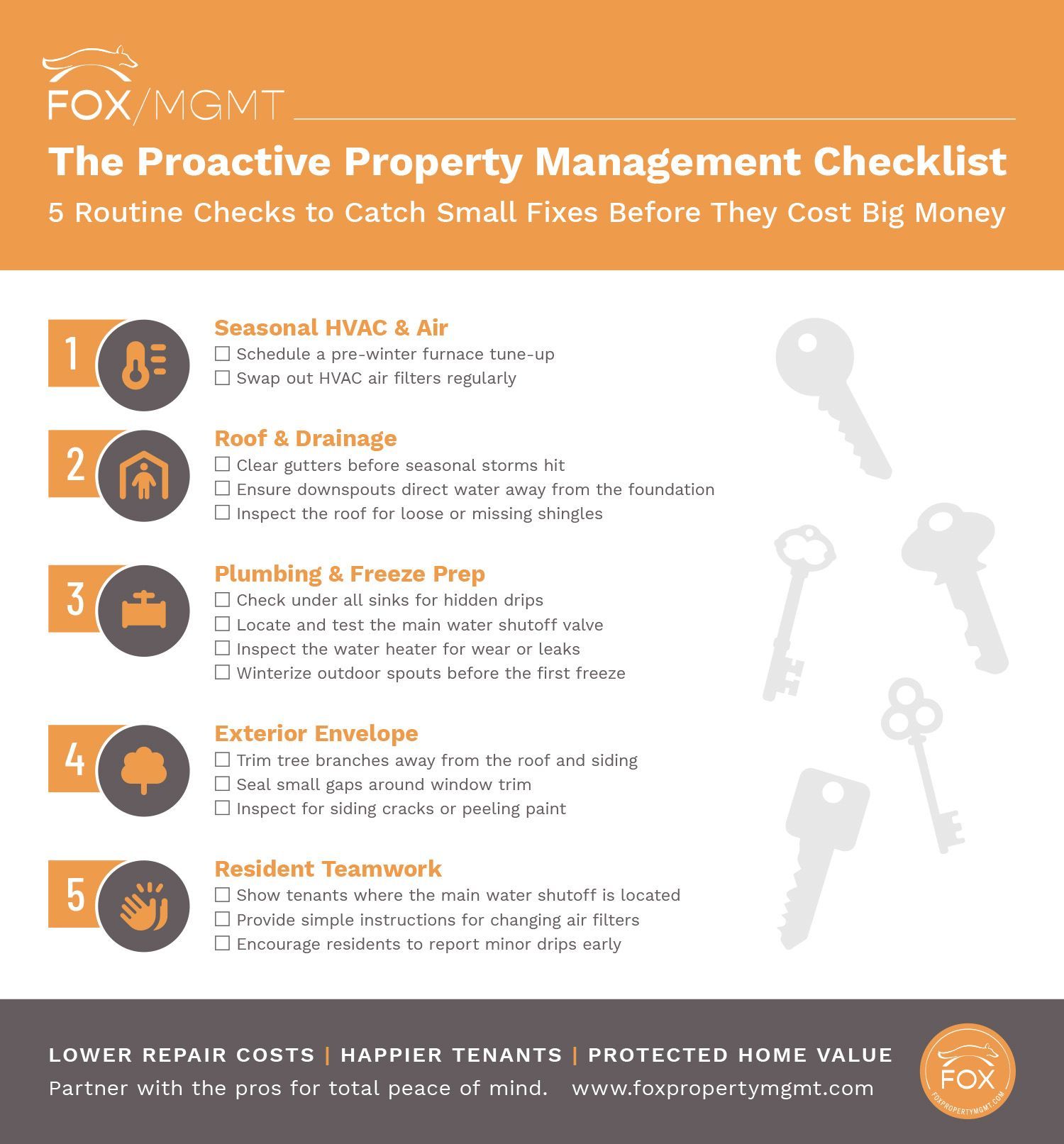
Staying ahead of home maintenance doesn't have to be complicated. It comes down to a few core checkups that save you major time and money down the road.
1. Seasonal HVAC and Filter Care
Your heating and cooling systems are easily some of the most expensive parts of your house to replace. Neglecting basic maintenance can cut their lifespan in half and cost you a bundle when you least expect it.
A quick furnace tune-up before winter and regular filter swaps keep air flowing clean and smooth. These simple checkups help equipment last for years, lower energy bills for your tenants, and prevent sudden breakdowns when the weather gets extreme.
Keeping your home's air systems happy is just the start of protecting the physical structure.
2. Roof, Gutter, and Water Drainage Inspections
Water is your home's worst enemy if it gets where it doesn't belong. Clogged gutters, misplaced downspouts, or missing shingles can quietly lead to foundation issues, siding damage, and hidden leaks.
Clearing gutters before the seasonal storms hit and making sure downspouts carry water away from the foundation saves you tons of trouble. Fixing a loose shingle early costs virtually nothing compared to repairing water damage inside your walls.
Once you know the roof and gutters are handling rain and snow, it is time to check what is happening under the sinks.
3. Plumbing Lines and Freeze Protection
Plumbing leaks almost always start out as tiny, quiet drips under sinks, behind cabinets, or around water heaters. Over time, that small drip rots out subfloors and creates mold problems before you even notice it is happening.
Checking under sinks during regular walk-throughs and testing the main water shutoff valve keeps your plumbing rock solid. Giving the water heater a quick look and prepping outdoor spouts before winter freezes hit saves you from catastrophic pipe bursts. Inside water lines are crucial, but you also need to make sure the outside envelope of your home stays sealed tight.
4. Exterior Envelope and Tree Trimming
The outside of your house is its first line of defense against the elements. Small siding cracks, peeling paint, or tree branches rubbing against the roof create easy entry points for moisture and pests.
Trimming back long branches and sealing up small gaps around window trim keeps your home looking great from the street. It also keeps unwanted critters outside where they belong and preserves your exterior finishes. Taking care of the physical house is huge, but working together with the people living inside it makes everything run even smoother.
5. Proactive Resident Education and Communication
Preventative maintenance works best when your tenants feel like part of the team. Giving residents simple tips on changing filters or showing them where the main water shutoff is located helps keep the home safe every day.
When you maintain an approachable, friendly relationship with your tenants, they feel comfortable giving you a heads-up about minor drips right away rather than waiting until a small issue turns into a major flood.
Making these proactive habits part of your routine completely changes the financial math of owning rental real estate.
The Real Financial Impact of Preventative Property Care
Taking care of your home ahead of time isn't just about avoiding midnight emergency phone calls. It is a genuine financial strategy that helps your investment grow steadily year after year.
- Lower Overall Repair Costs: Scheduled tune-ups using trusted, vetted local maintenance contractors cost way less than emergency weekend repair rates.
- Happier Tenants Who Stay Longer: Residents love living in a home where everything actually works, which keeps vacancy low and saves you turnover costs.
- Protected Home Value: Keeping all your structural systems running right protects your home's curb appeal and keeps your equity growing.
If you are currently trying to decide whether keeping a former primary residence makes sense for your financial future, check out our easy breakdown on whether you should sell or rent your starter home. And if this is your very first time managing a property, exploring our tips for accidental landlords in Colorado will help you set up a simple, stress-free maintenance routine right from day one.
Partner with Fox Property Management for Total Peace of Mind
Managing a rental home shouldn't feel like a stressful, endless loop of fixing unexpected problems.
Fox Property Management brings over two decades of local Front Range experience to taking care of residential properties. Our team handles all the daily details, from routine maintenance checkups and contractor coordination to tenant relations and legal compliance, so you can kick back and enjoy true passive income.
Reach out to our friendly team today to
request a free rental property valuation and see how easy proactive property management can be.




Why Fox Is One of the Sundance Film Festival's Preferred Partners for Property Management in Boulder